Messier ’57

An electric drum, with an acoustic feel,
plugged right into an amp or guitar pedal.

GitHub
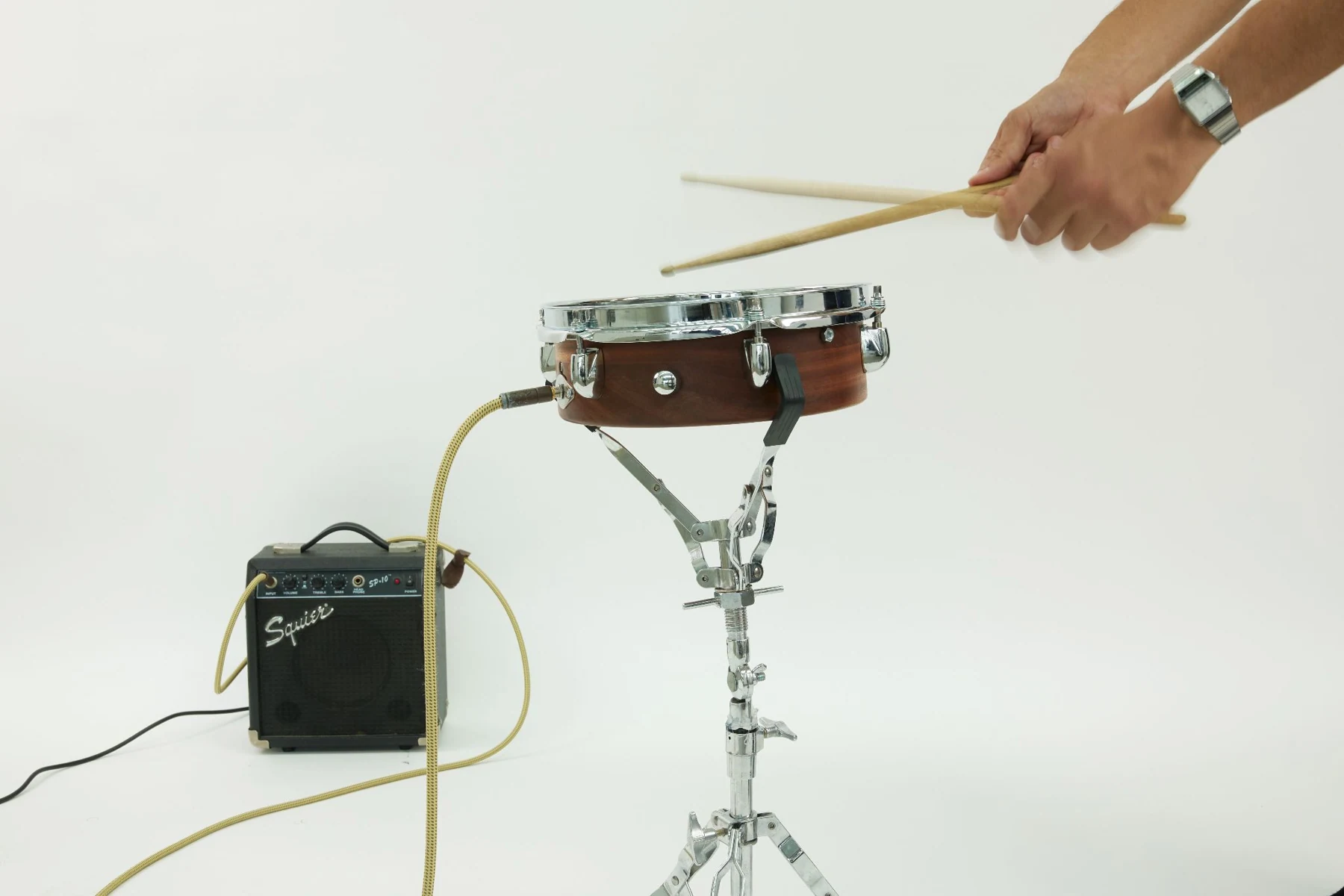
Peter’s Messier 57 drum on a snare stand, connected by a cable to a Squier amplifier

About the drum

Designed at the Royal College of Art in 2024.

I wanted electronic sound to follow how a drummer plays: brushes, quiet strokes, rim hits and changes in touch. The drum still had to sound good acoustically.

The final version used a lavalier under the head and a contact microphone at the edge. Their audio excited a physically modelled snare in Pure Data. A switch selected head, rim or both. Pulling the brass latch loosened the synthesized snares; releasing it returned them to their usual tension.

It was exhibited at the London Design Festival as part of the RCA’s Curious Habits show. Earlier versions were tested with Ayo Salawu and Dru Masters.

How it makes sound

  1. Two microphones

    The lavalier captures the head. The contact microphone helps identify the playing area.

  2. Bela and Pure Data

    The microphone audio excites CHAIR’s snare model. The sound changes with the playing.

  3. Audio output

    The drum connects to an amplifier or guitar effects. Its acoustic sound is still heard.

The microphone signal shapes the synthesis.

The interior

Testing with Ayo Salawu

Ayo played an earlier spring-and-pickup version.

Ayo Salawu — playing test 1
Ayo Salawu — playing test 2
Ayo Salawu — playing test 3
Ayo Salawu — feedback

Original project film

Watch on YouTube

Development

The final version is shown first. The photographs and videos document the earlier tests, the build and the changes that followed.

Lavalier, contact microphone and momentary control

The spring pickup was not capturing enough of the frequency range of a hit. I replaced it with a lavalier under the head, with a contact microphone on the body controlling a gate. This gave the snare model a fuller audio signal to work with.

The small knob was difficult to adjust quickly without losing its previous setting. I tried a hairpin, then an acrylic lever with an external spring, before making the brass fork and short internal return spring. Pulling the fork changed the sound; releasing it returned to the resting setting.

Bela Mini struggled with the full physical-modelling patch. My planned next step was a small headless computer running Max/MSP.
Finished instrument
Final two-microphone assembly
Three-position switch plaque
Short internal return spring
Shaping the brass fork
Audio testing setup

All photographs from this stage (19)

Testing a control
Earlier spring-pickup assembly
Machining the brass stock
Drilling the brass shaft
Turning a brass component
Testing the return anchor
Cutting the brass fork
Testing the brass latch
Momentary latch movement
Short internal return spring
Wiring the final assembly
Training the playing zones
Pure Data hit detection

Bela and the spring pickup

I added Bela Mini to test digital processing and a wider range of sounds. I programmed the instrument in Pure Data and tried a single control for sustain.

This version still used the pickup and long sensing spring. I was looking for a quicker response from the head and a control that could be used more easily while playing.

Hand-drawn internal layout
Early control and lever sketches
Bela version in Rhino
CNC-routed wooden shell
Sapele bottom panel
Early embedded assembly

All photographs from this stage (24)

CNC routing the shell
Laser cutting parts
Tapping the wooden shell

A wooden drum with an analogue signal

I modelled the shell and internal supports in Rhino, sourced sapele and made the parts with CNC routing, laser cutting, welding and hand finishing. I glued the wooden sections, fitted the frame and wired the pickups.

Dru Masters tested the drum through guitar effects. He saw uses for film sound and percussion, and suggested more control over the tone. I wanted to improve the raw sound and broaden the range beyond tom-like sounds.

Early Rhino shell model
Sapele timber stock
CNC fixture design
Welding the pickup support
Assembled mesh-head drum
Dru Masters testing the drum

All photographs from this stage (25)

Pressing the metal frame
Laser cutting metal

The practice-pad experiment

I attached a guitar pickup and a spring to a mesh practice pad. The idea was for a hit to set the spring vibrating, giving a longer sound that could be changed by adjusting its tension.

I compared it with a contact microphone using sticks and brushes. The contact microphone had a short attack and decay; the pickup and spring had a slower, longer response. I soldered a blend control to test them together.

Mesh practice pad and pickup
Side view of the practice-pad mechanism
Guitar pickup with a sensing spring
Pickup, blend control and contact disc
Soldered wiring harness
Blend potentiometer wiring

All photographs from this stage (8)

Additional photographs from the original portfolio

Finished wooden electric drum with wire brush in warm light at London Design Festival 2024
MESSIER '57 drum exhibited on a steel plinth by a window at London Design Festival 2024
Drummer Ayo Salawu's hands testing the mesh-head wooden electric drum with sticks
Hand adjusting the drum's onboard volume knob while a drumstick hovers, small amp in the background
Rhino CAD render of the drum with translucent shell revealing internal pickup and spring
Top-down Rhino CAD view of the drum showing internal spring and pickup layout
Inside the drum shell: tension spring, piezo disc, pickup and hand wiring on wooden bracing
Pure Data patch wiring a piezo-excited virtual string synthesis for the drum
Drum, stand and amplifier during a playing test
Playing the mesh-head drum
The drum on its exhibition plinth

Research and references

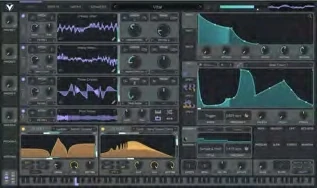
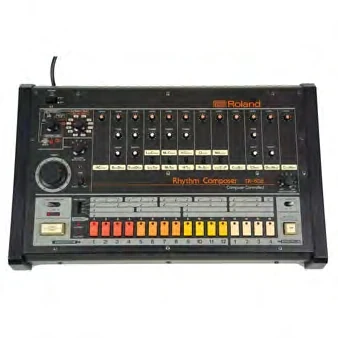
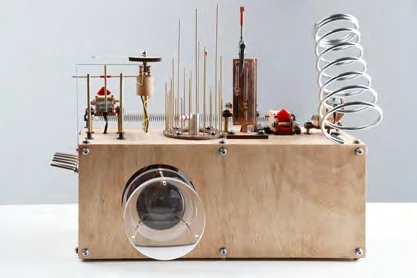
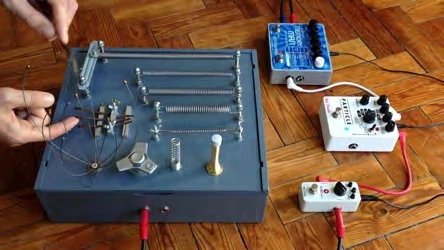
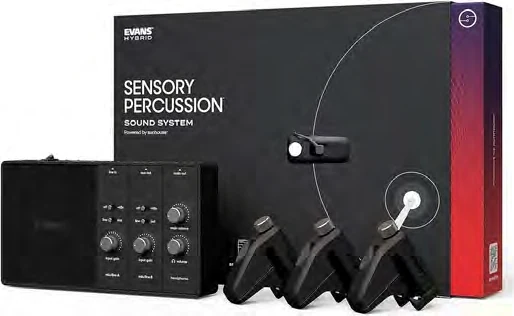
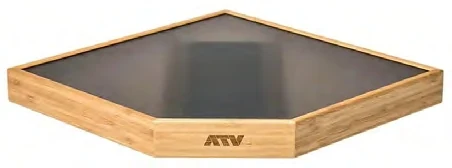
I looked at electronic drums, Sensory Percussion, the ATV aFrame, noise boxes, synthesizers and pedals. I was interested in how they sensed playing, how they were controlled and what could be changed by the musician.

Evans Sensory PercussionATV aFrameSoftware synthesizer interfaceDrum-machine controlsAcoustic noise box with springsHandmade analogue sound interface
See all research and reference images

The metal control plaques were also informed by electric instruments such as the Fender Rhodes.

Project files

Download the Pure Data patches, original drum CAD, parts list and build notes. Use the sound engine with your own instrument, or start from the mechanical design.

Instrument design: Peter Neyra. Snare and kick models: CHAIR. Original credits and dependency licences are included.