 Hardware
Artisan Glove
Artisan Glove is a sensing-glove design for recording hand contact, vibration and video.
 GitHub
 Documentation
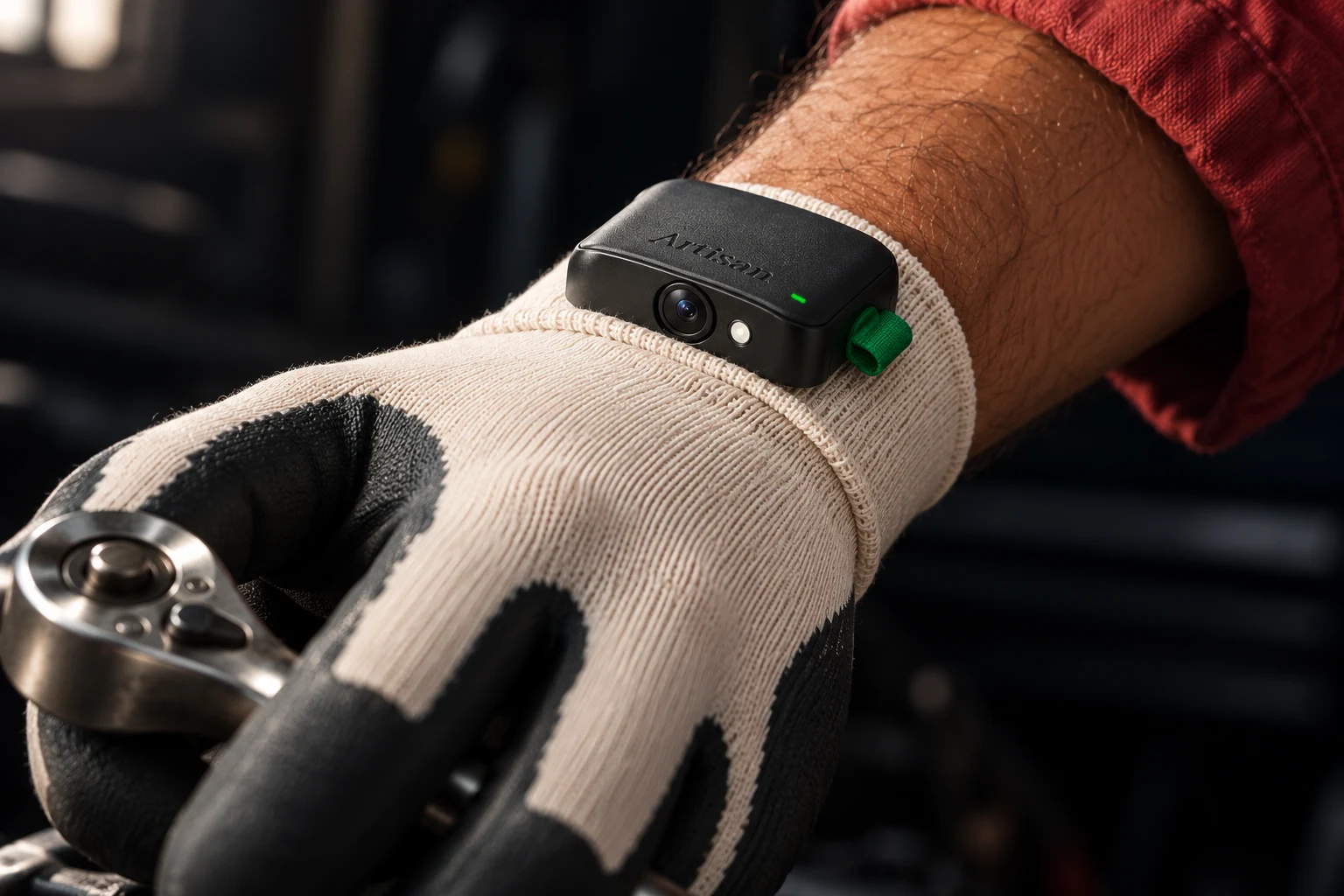
Recording a hand interaction
The design pairs footage with contact, vibration and motion readings so a hand interaction can be inspected across those signals.
Contact
Twenty pressure sites record contact across the hand. Twenty PVDF channels provide the contact-vibration inputs.
Context
Two IMUs and a cuff camera add motion and a view of the interaction.
Recording
The ESP32-S3 firmware and SD-recording design bring the capture inputs into the cuff.
This describes the V4 capture design. Its firmware has a recorded ESP32-S3 compile and reproducible host checks; qualification of a physically assembled V4 glove is pending.
The current cuff
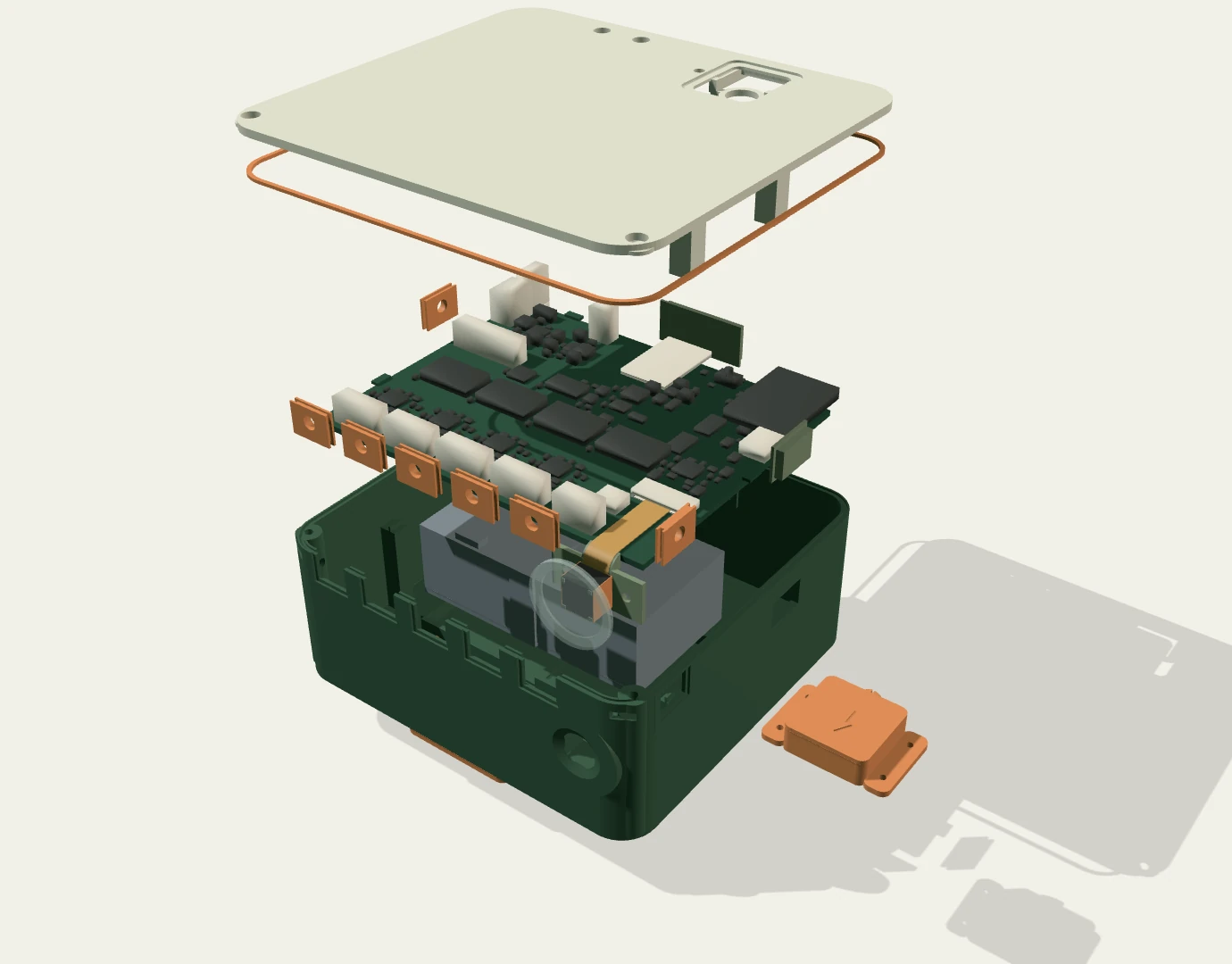
The native enclosure model contains the actual part geometry and PCB component envelopes. Explore it assembled, open or exploded, then select an individual component.
Current enclosure: 112 × 104 × 45.5 mm. The compact appearance concept and this engineering envelope are separate design records.
Engineering status
| Firmware | Recorded ESP32-S3 compile, with current host checks for acquisition, HTTP, packet/protocol and camera logic. |
| Main board | Native eight-layer KiCad design; the canonical applied board has 20 unconnected items. Routing and fabrication qualification are the next steps. |
| Hand tile | Separate 16 × 16 mm IMU tile, with native design and hashed manufacturing outputs. Its physical first article remains to be tested. |
| Enclosure | Native geometry, component envelopes, printable parts and nominal CAD checks. |
| Integrated V4 | Physical assembly and qualification are pending. |
Early sensing experiments
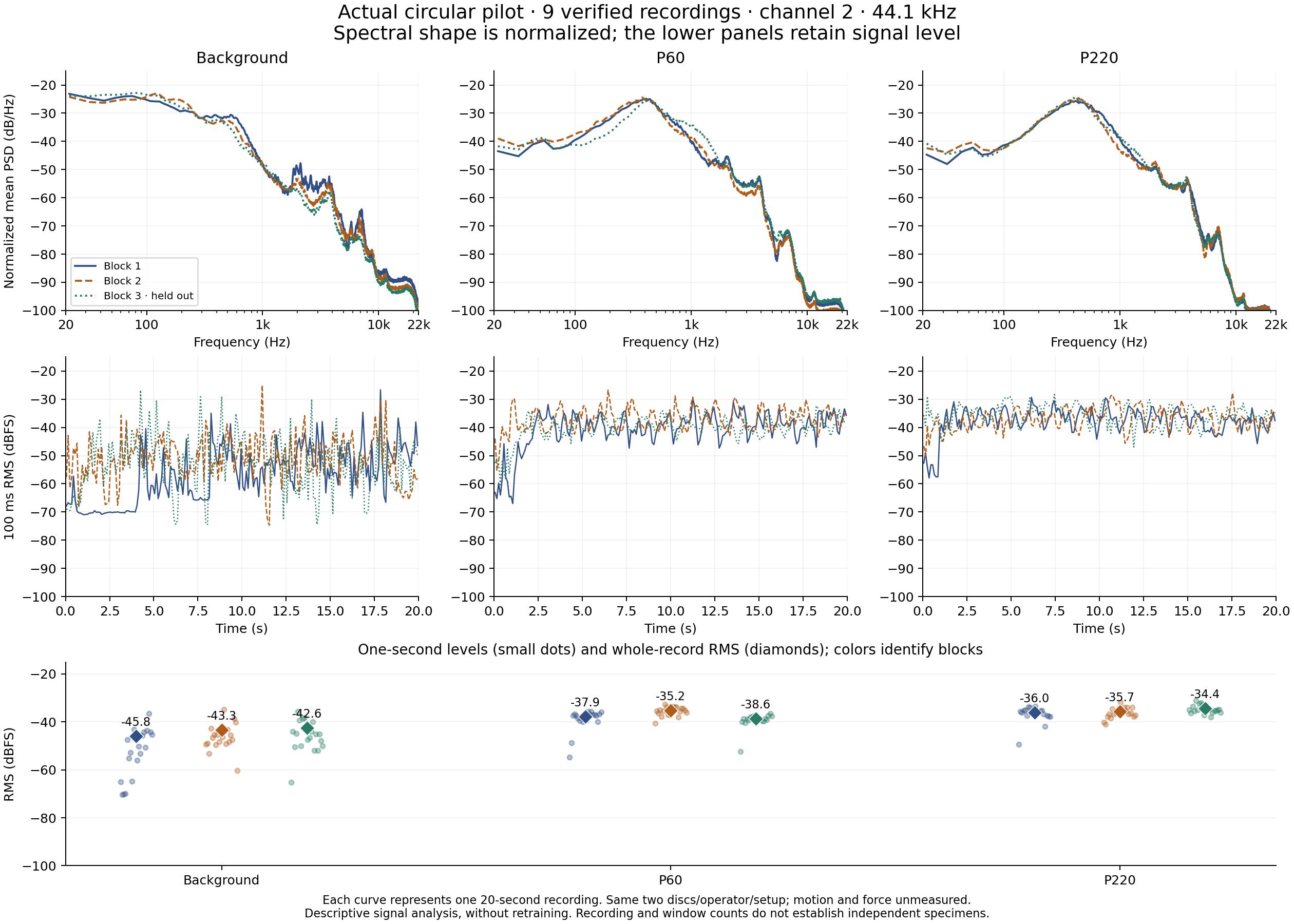
An earlier Bela Mini pilot recorded nine samples across background, P60 and P220 conditions. The figure compares their spectra and signal levels under the same setup; contact force and motion were unmeasured.
That pilot produced the raw signal comparison shown here. Its saved-clip classifier and unsuccessful live grit-identification trial are documented separately from the V4 cuff design.
Appearance studies
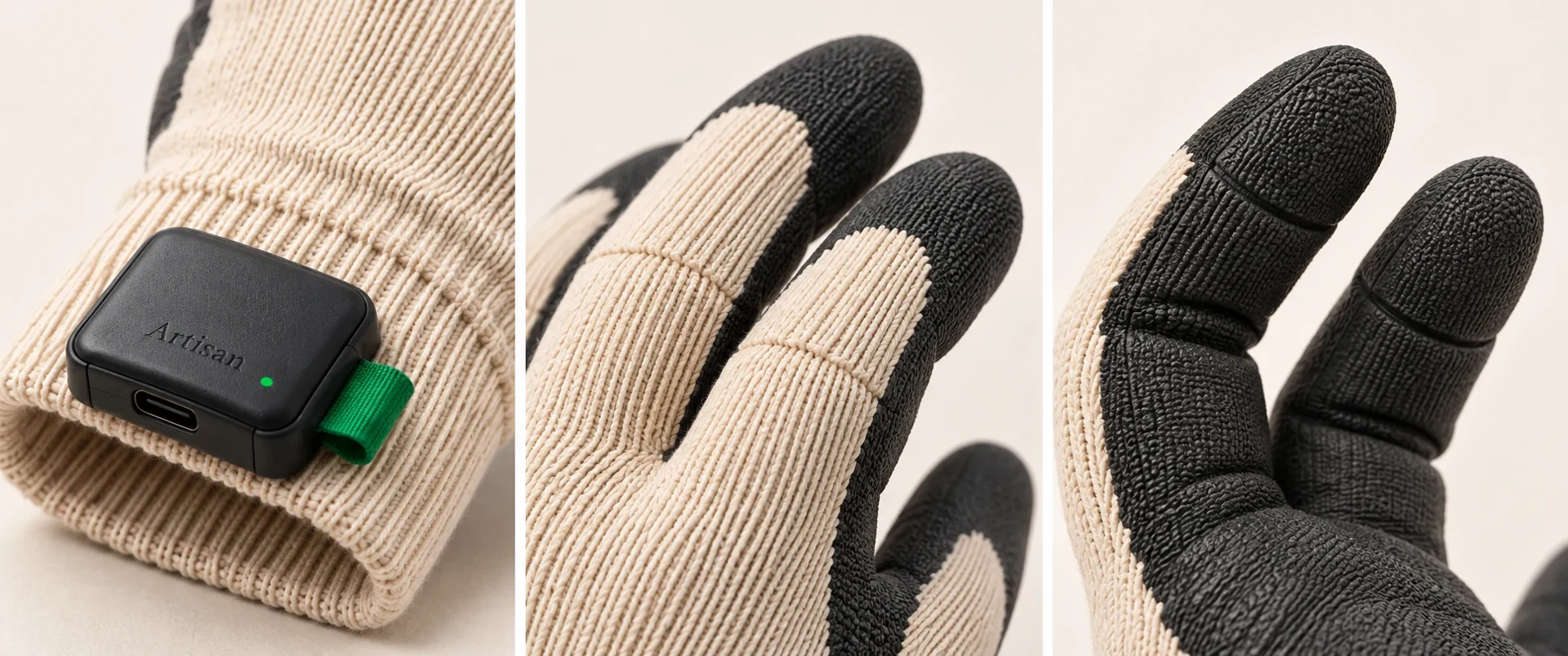
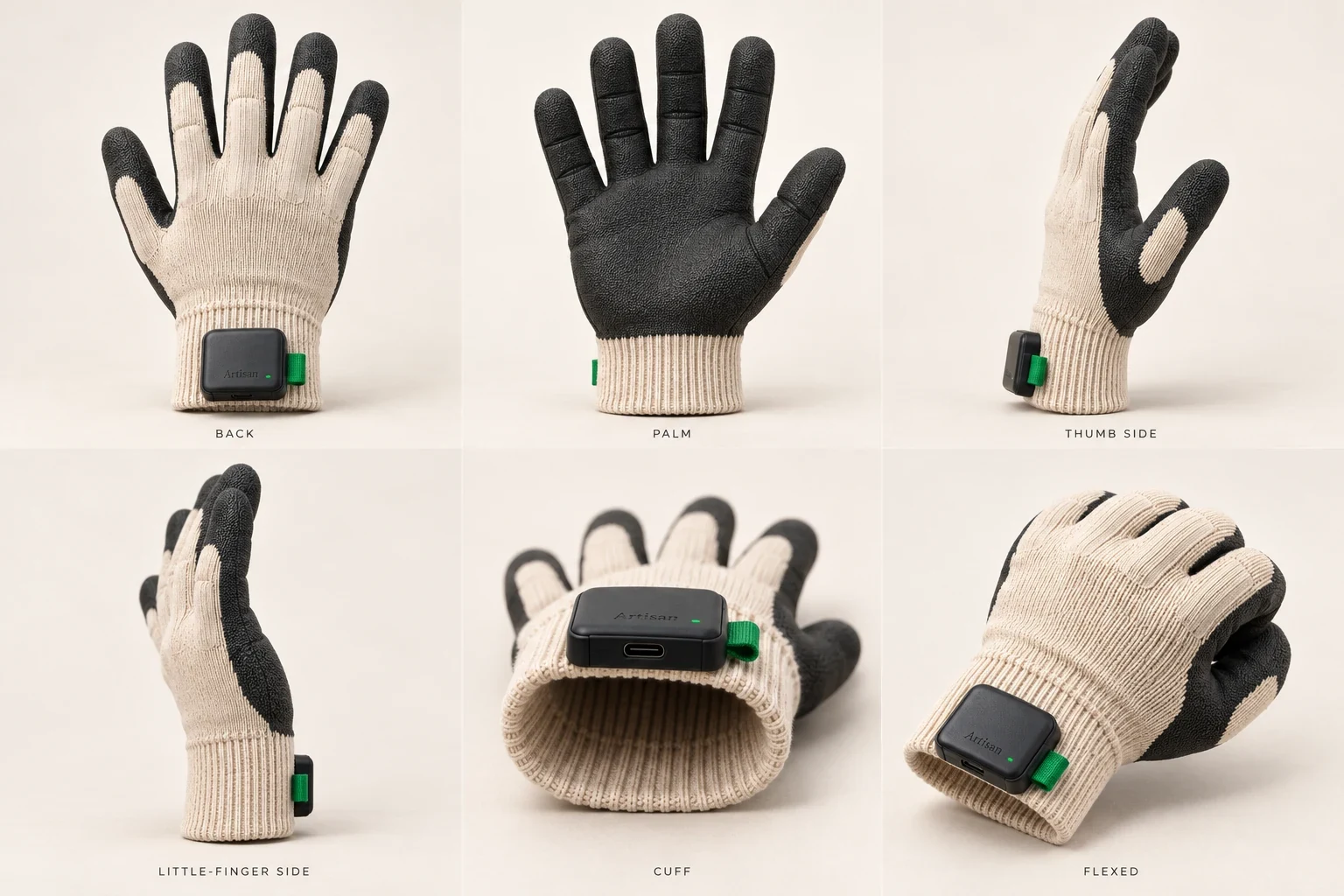
Earlier material and form studies explored the glove and its cuff. The current appearance concept adds the cuff camera; the native engineering model records the present dimensions and components.
Build from the source
The reusable engineering subset contains firmware, native PCB design and enclosure files. Its guides distinguish compiled software, released hand-tile outputs, unfinished main-board routing and physical tests still to perform.
The bundled device monitor provides a hand contact map, camera view, selected vibration waveform and spectrum, labels and acquisition health. It waits for actual cuff data; the source guide shows how to open it locally and connect a built device.